.avif)

DAY & NIGHT


.jpeg?width=1440&height=819&format=webp&quality=80)
Just recovered from the flu, but still have an annoying lingering cough? According to the American College of Chest Physicians, a cough can last up to eight weeks after the flu.1 So don’t let it upset your daily routine — here’s what you need to know to manage it well.
Cough does not always signal an infection or the onset of a medical condition. The body uses ‘coughing’ as a protective mechanism to clear your airways and remove germs and irritants from your lungs and throat.2
The main reason behind post flu cough is thought to be post-infection inflammation and a sensitization of the airways.2
Our bodies protect and heal themselves in many ways. One of these is inflammation, which helps fight infections and heal injuries. After the flu, swelling in the nose and airways can cause a dry cough post flu.3
Mucus buildup can also make the airways more sensitive, which can lead to cough after flu recovery.2
Cough after flu is a more common occurrence than cough after Covid or other respiratory tract infections. Research shows that most post flu coughs last between 1-3 weeks. However, there are many cases when post flu cough won’t go away, remaining for up to 8 weeks.1
It is important to get yourself checked by a medical practitioner, simply to rule out any other medical conditions like asthma, pneumonia or other infections.
Speaking of consulting a doctor, there are a few signs and symptoms you can inform your doctor about when you visit them. Let’s dive into what these are:
Type of cough: Do you have a dry or wet cough. Does it sound out of the ordinary (wheezing or whooping sound) or is it just a simple dry cough. What is the intensity of the cough? Does your throat hurt when you cough? Post flu cough is usually a dry cough, not severe, but does tend to distract you from your daily routine.
Time: How long have you been experiencing a dry cough post flu? A post flu cough can last up to eight weeks after the flu symptoms disappear. Do you experience the cough throughout the day or predominantly at night? If you’ve been experiencing the cough for more than three weeks, have you noticed a gradual decrease in it’s intensity?
Other medical conditions: Medical history is important when trying to identify a post flu cough. This is to ensure that the cough is not a symptom of another medical condition such as asthma, bronchitis or a new infection altogether. It may also be because of moving to a new environment, pregnancy or another factor that’s causing the cough.
Medical tests: Your doctor may check your throat and prescribe some tests to make sure that the cough is not caused by another medical condition. The main indicator of the post flu cough is the lack of mucus at the back of the throat and in the lower airways.
As the name itself suggests, a ‘post flu cough’ is not contagious, because it is an after effect of the flu. The flu virus is known to be active only during the first three days of the illness.4
So to stay on the safe side, although post flu cough isn’t contagious, take necessary precautions such as:4
Remember that the post flu cough is simply an after effect having the flu – a viral infection. Healthy food, plenty of fluids, rest, and light exercise can help boost your immune system. This allows your body to heal and reduce the irritation that leads to a post-flu cough.
A long-lasting cough can be uncomfortable and frustrating.If you are looking for simple ways to relieve dry cough, some simple home remedies can help calm your throat and ease dryness:
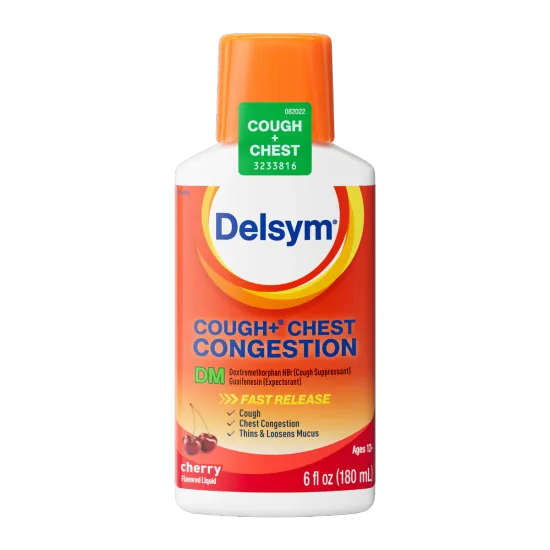
If your cough does not get better with home remedies, you can try a trusted over-the-counter (OTC) medicine like Delsym® Cough+ Chest Congestion DM Liquid, for adults and children over 12. Always talk to your doctor before taking any OTC medicine, especially if you have other symptoms or are taking other medicines.
If your cough after the flu doesn’t seem normal, or you notice any of these symptoms, it’s best to check with your doctor:4
Keep an eye on your symptoms and the medicines you take. With care, you’ll be feeling better in no time.
Braman SS. Postinfectious cough: ACCP evidence-based clinical practice guidelines. Chest. 2006;129(1 Suppl):138S-146S. doi:10.1378/chest.129.1_suppl.138S
Centers for Disease Control and Prevention (CDC). https://www.cdc.gov/flu/about/index.htm
Note: These statements have not been evaluated by the Food and Drug Administration. This product is not intended to diagnose, treat, cure, or prevent any disease. |